Show comparisons
Wicked vs. Aladdin: which Broadway musical fits your family?
Compare Wicked and Aladdin for a family Broadway visit, including story, official age recommendations, running time, seating priorities, and booking plans.

THE QUICK ANSWER
Which should you choose?
Choose Aladdin if your family wants a Disney story with a musical-comedy starting point and a shorter performance. Choose Wicked if the strongest interest is Oz, Elphaba and Glinda, or a more complicated friendship story. Aladdin has the younger published age recommendation, but the child’s interests and attention span still matter more than a simple family-show label.
A family Broadway booking can involve several different expectations. One person wants a familiar story, another wants a big occasion, and the adult buying tickets needs the date, seats, and total to work for everyone.
Wicked and Aladdin are reasonable shows to compare because both offer recognizable fantasy worlds. They are not interchangeable. This guide separates the artistic choice from the practical questions so you can make a booking your family is actually looking forward to.
At a glance
On a small screen, scroll across to compare every column.
| Decision | Wicked | Aladdin |
|---|---|---|
| Story starting point | Elphaba and Glinda in the world of Oz | Disney’s Aladdin story adapted for the stage |
| Our suggested fit | A family drawn to friendship, identity, and Oz | A family looking for a familiar Disney musical comedy |
| Published age recommendation | 8 and older | 6 and older |
| Running time | About 2 hours 45 minutes including intermission | About 2 hours 30 minutes including intermission |
| Broadway venue | Gershwin Theatre | New Amsterdam Theatre |
Production details: see checked sources. Confirm current information before booking.
Ask the child which story sounds more interesting
Start with a brief description of each story, not a sales pitch for the one the adults prefer. Wicked focuses on the relationship between Elphaba and Glinda and invites a different view of familiar Oz characters. Aladdin brings the Disney story to the stage, with music from the film alongside material written for the production.
For a child already interested in one world, that connection is useful. They may enjoy looking forward to characters and songs they recognize. For someone unfamiliar with both, explain the basic premise and listen to a short official music sample together. There is no need to reveal the ending to make an informed choice.
Treat hesitation as information. If the child has little interest in either story, a famous Broadway title will not necessarily create it. Broaden the shortlist rather than assuming that an expensive ticket will turn uncertainty into enthusiasm. The goal is a shared visit, not completion of a sightseeing checklist.
Source: Wicked: the story of Elphaba and Glinda; The Broadway League: Aladdin production, age, venue, and running-time information
Choose between a Disney comedy and a complicated friendship
Aladdin is our starting recommendation for a family specifically asking for a Disney musical comedy. Familiarity with the film can give the group a clear sense of why it wants to attend. The stage adaptation should still be approached as its own production rather than a promise that every screen moment will appear in exactly the same form.
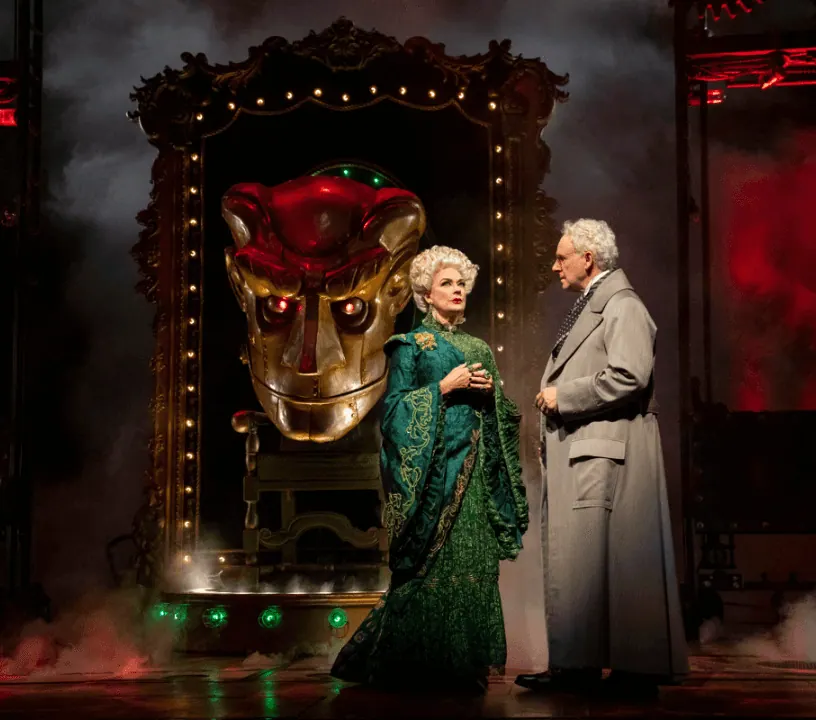
Wicked is our starting recommendation when the appeal is Elphaba and Glinda: two characters whose relationship provides a way into questions about friendship, identity, and reputation. A family may enjoy talking afterward about why different people interpret the same character differently.
Neither recommendation is an assessment of a particular night's cast or performance. Think about the conversation you would like your outing to begin. A request for Disney familiarity points one way; a strong interest in the Oz characters points the other. That is more useful than trying to name a universally better family musical.
Source: Wicked: the story of Elphaba and Glinda; The Broadway League: Aladdin production, age, venue, and running-time information

Age recommendations are guidance, not interchangeable entry rules
Wicked's official Broadway FAQ recommends ages eight and older and says children under five are not admitted. The Broadway League's Aladdin listing gives an intended audience of ages six and older and states that everyone needs a ticket. Check Aladdin's current admission policy separately before buying for a younger child.
A recommendation and a minimum admission age answer different questions. The first helps you judge likely suitability; the second determines whether someone may enter. A child being allowed into a theater does not establish that the material, sound, or length is a good match for that child.
Also avoid making the oldest child's preferences stand in for the youngest's. If siblings differ in age or interests, discuss what each will find manageable. Read current production advisories and contact the venue about specific needs. Do not rely on the broad word family as a substitute for that conversation.
Source: Wicked Broadway: age guidance and running time; The Broadway League: Aladdin production, age, venue, and running-time information
The shorter option still needs a substantial attention span
The listed running times are approximately two hours and 45 minutes for Wicked and two hours and 30 minutes for Aladdin, both including intermission. Aladdin is shorter in this comparison, but the difference does not make it a brief activity. Both require a meaningful stretch of time in a theater seat.
Plan the day around that reality. A family arriving after a long flight or a full day of walking may find any long performance demanding. Consider whether an afternoon or evening better fits the child's energy, and avoid placing a rushed meal immediately against the performance start.
An intermission is useful for a break, but it should not be treated as a guarantee that every practical task will fit comfortably. Follow the theater's instructions and plan essentials before arrival where possible. A manageable day can improve the visit more than choosing solely on a fifteen-minute running-time difference.
Source: Wicked Broadway: age guidance and running time; The Broadway League: Aladdin production, age, venue, and running-time information
For family seats, solve the viewing problem before the price problem
Wicked plays at the Gershwin Theatre; Aladdin plays at the New Amsterdam Theatre. Compare the actual seats available at each venue. A section name alone will not tell you whether a shorter child will have a comfortable view or whether the route to the seats suits your group.
Read view restrictions and consider angle, distance, and what is in front of the seat. Ask the theater about its current arrangements if your party needs a booster or other assistance; do not assume availability. Likewise, check access requirements separately from choosing a location that looks appealing on a seat map.
Search for the whole family together. Buying one attractive ticket first and hoping to add neighboring seats later can create an avoidable problem. Where individual-seat selection is offered, verify every row and seat number. If the option is a section or price band, read the allocation and sitting-together conditions. Check that the arrangement works for the adults and children attending.
Compare the full family order
A family price comparison should use the same number of tickets, performances you can attend, and seats you consider acceptable. A starting price for one isolated seat cannot establish the cost of four together. Nor does a lower price for a different date help if the family cannot use it.
Discuss what the budget includes. Tickets may be only part of the afternoon or evening, particularly if meals and transportation are involved. A show that fits neatly into your existing day can be a better overall choice than a nominal ticket saving that adds more travel or leaves a difficult gap in the schedule.
If the first search is outside your budget, compare another usable performance or seating area before deciding the whole show is unaffordable. You can also broaden the shortlist. Keep the family’s age requirements and essential seating needs fixed while comparing the complete price for options you can actually book.
Our recommendation for three family situations
For a family whose child keeps asking for Disney songs and knows Aladdin, start with Aladdin. Check the current age guidance and available seats, then choose a performance that leaves enough energy to enjoy it. Familiarity is a useful positive reason to book, even if the adults have seen the film many times.
For an older child or teenager interested in Oz and the relationship between Elphaba and Glinda, start with Wicked. Give that interest more weight than choosing a shorter show by default. Confirm that the running time and performance schedule fit the day you are planning.
For a mixed family with no strong preference, put the practical offers side by side. Better-fitting seats, a convenient time, and a manageable total can reasonably decide the choice. If neither works, keep looking. A successful first Broadway visit begins with a show and plan the group wants, not a requirement to pick one of these two titles.
YOUR QUESTIONS, ANSWERED
Your questions answered
Is Aladdin or Wicked better for younger children?
Aladdin has the younger published recommendation: six and older, compared with Wicked’s eight and older. Use that as a starting point, then consider the child’s interests, attention span, and current admission rules.
How much shorter is Aladdin than Wicked?
The listed running times differ by approximately fifteen minutes: Aladdin is about two and a half hours and Wicked about two hours and 45 minutes, including intermission.
Does every child need a ticket?
Plan to purchase a ticket for every person attending and check the production’s current admission policy. Do not assume that a child can enter without a ticket or share an adult’s seat.
Should we watch a movie before going?
Familiarity can help your family decide which story interests it, but watching a movie is not a booking requirement. A short synopsis or official music sample may be enough to choose.
Which theater has the best seats for children?
There is no single answer for every child and budget. Compare the actual row, view restrictions, distance, access, and seats available together at the Gershwin and New Amsterdam theaters.
Should we choose a matinee for a family visit?
Choose the performance that best fits your family’s energy and itinerary. A matinee may suit some children, but verify the actual start time and avoid overloading the rest of the day.
Sources & editorial approach
Production details checked on October 24, 2026. Recommendations are The Broadway Guide’s planning analysis, not claims of attendance at a particular performance. Prices, schedules, casting, and policies can change.
- Wicked: the story of Elphaba and Glinda ↗
- Wicked Broadway: age guidance and running time ↗
- The Broadway League: Aladdin production, age, venue, and running-time information ↗