Planning guides
Best Broadway shows for teenagers: a parent’s booking guide
Choose Broadway tickets for teens by interests, content guidance, running time, and seats. Compare The Outsiders, Hamilton, Wicked, and Harry Potter.

THE QUICK ANSWER
Where to start
Start with the teenager’s interests: The Outsiders for a coming-of-age story, Hamilton for its musical take on history, Wicked for friendship and fantasy, or Harry Potter and the Cursed Child for a return to the wizarding world. Check content and sensory guidance separately from age recommendations, then choose seats and a performance time the whole party can manage.
The best Broadway show for a teenager is rarely the one an adult picks simply because it sounds educational. A useful choice starts with what the teen reads, listens to, laughs at, or wants to talk about. The booking should feel like their night out, too.
These four productions give you different starting points from our catalog. The recommendations below are planning judgments based on production information, not a claim that every teenager will respond the same way. Ask the person attending before turning an interest into a surprise booking.
At a glance
On a small screen, scroll across to compare every column.
| Show | Interest to start with | Published duration and guidance |
|---|---|---|
| The Outsiders | Belonging, rivalry, and a familiar novel | 2h25 including intermission; recommended 10+; significant content advisories |
| Hamilton | History and a score blending hip-hop with other styles | 2h45 including intermission; recommended 10+; strong language |
| Wicked | Friendship, outsider identity, and fantasy | About 2h45 including intermission; recommended 8+ |
| Harry Potter and the Cursed Child | Wizarding-world characters and a new generation | About 2h55 including intermission; suitable 8+; under-15s need an adult |
Production details: see checked sources. Confirm current information before booking.
Start with interests instead of a universal teen ranking
Ask the teen to choose two things they want from the outing: a story they know, music they like, a new discovery, or a shared experience with friends or family. Then ask what would put them off. Someone excited by a novel adaptation may have little interest in a show chosen purely for its chart recognition.
Make a two-show shortlist together rather than handing over a list of ten and asking for a verdict. Read a short synopsis and, for a musical, try a brief official music sample. You can preserve surprises while still giving enough information for an informed choice.
Allow for different tastes within the same age group. A 13-year-old who enjoys complex stories may choose differently from a 17-year-old who wants a light evening. Age helps you check rules and guidance; it does not reveal a person’s attention span, emotional readiness, or enthusiasm for a particular style.
The Outsiders: for a teen interested in belonging and loyalty
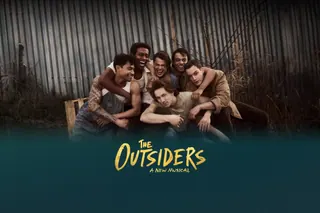
The Outsiders places Ponyboy, Johnny, and the Greasers in conflict with the Socs in 1967 Tulsa. Its sources are S. E. Hinton’s novel and Francis Ford Coppola’s film. That gives a reader of the book a concrete reason to be curious about what happens when the story becomes a musical.
Ask what interested them in the story: friendship, class divisions, identity, or the choices people make under pressure. Those answers can help distinguish a genuine wish to see this adaptation from a general desire to see whatever classmates are discussing. If the novel was assigned at school, let the teen decide whether returning to it sounds appealing.
Read the production’s advisories together where appropriate. They include suicide, domestic abuse, and violence, alongside flashing lights, loud sounds, stage smoking, and haze. Its general age recommendation is ten and older, but that number does not cancel those considerations. Give a teen room to choose another show without having to explain a sensitive personal reason.
Source: The Outsiders: story and adaptation; The Outsiders: content and sensory advisories; The Outsiders: age guidance and duration

Hamilton: for a teen curious about history and musical storytelling
Hamilton follows Alexander Hamilton through a score combining hip-hop, jazz, R&B, and Broadway styles. The production’s New York FAQ recommends ages ten and older because of strong language. It lists two hours and 45 minutes including intermission.
Our suggestion is to consider it when the musical approach or the historical personalities already spark interest. Familiarity with a few names and the broad setting can help someone orient themselves, but preparation should make the visit more inviting rather than turn it into a test. Listening to an official sample together is a practical way to find out whether the sound appeals.
If the teen already knows the recording, ask what they hope to experience on stage. That answer may influence the seat choice: a closer perspective on performers or a broader view of the full staging. If they have never encountered the music, leave enough time to investigate before committing the whole family’s budget.
Source: Broadway League: Hamilton story and musical styles; Hamilton Broadway: running time and age recommendation

Wicked: for a teen drawn to friendship, reputation, and fantasy
Wicked looks at Oz through Elphaba and Glinda and the friendship that develops between them. For a teenager interested in how people acquire labels or navigate popularity, that premise gives the fantasy a personal point of entry. The official Broadway recommendation is eight and older, with an approximately two-hour-45-minute running time including intermission.
Consider it for a mixed-interest family if the central relationship appeals across generations. The useful question is whether the teen wants to spend an evening with these characters, not whether an adult remembers enjoying a different Oz story. A recognizable setting can help a first-time theatergoer feel oriented without dictating their response.
If interest comes from a film version, approach the stage musical as its own experience. Read the Broadway show page and check the actual performance details rather than assuming a screen running time, cast, or presentation carries over. Keep the conversation about what they hope to see, instead of promising that every familiar moment will work in the same way.
Source: Wicked: Broadway story; Wicked: duration and age guidance
Harry Potter and the Cursed Child: for a wizarding-world fan
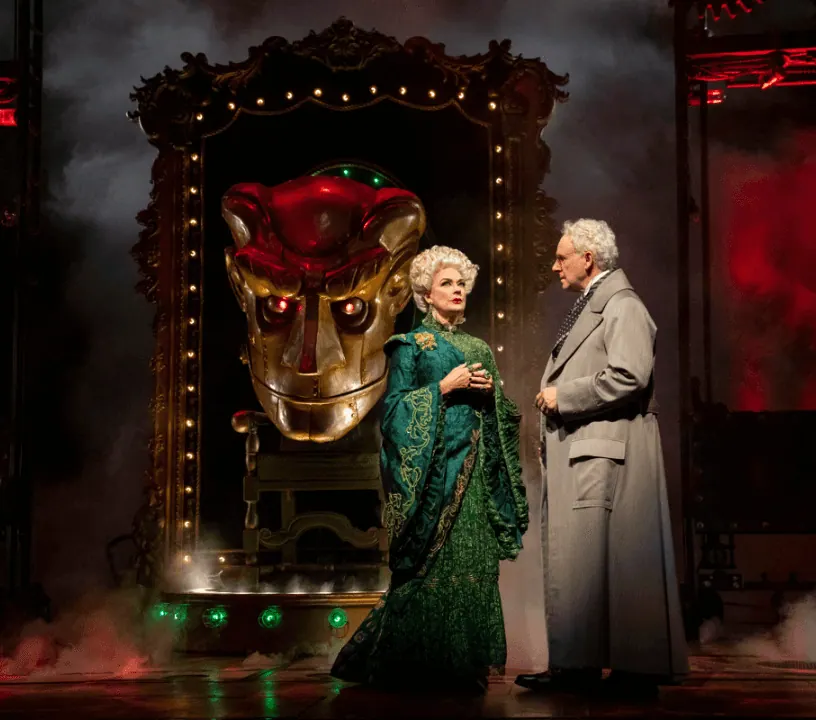
Harry Potter and the Cursed Child introduces a new generation through Albus Potter and his friendship with Draco Malfoy’s son. This Broadway production is a play, so choose it for the story and theatrical presentation rather than expecting a musical. A teen already interested in the fictional world has an obvious starting connection.
The official FAQ lists about two hours and 55 minutes including intermission, recommends ages eight and older, and requires an accompanying adult for children under 15. It also identifies strobe lighting and other visual and sound effects. Check those details before planning a younger teen’s independent outing.
For a newcomer attending with a devoted fan, a brief introduction to the central characters can make the visit more welcoming. Let the fan share enough context to help without explaining the whole plot. Then plan a meal and arrival time that suit the longest production in this shortlist rather than fitting it into a day already full of timed commitments.
Source: Harry Potter: Broadway story; Harry Potter: duration, effects, and adult accompaniment

Choose the seats as a family decision
Agree on whether everyone needs one continuous block of seats or whether nearby pairs would work. If an adult needs to sit beside a particular teen, protect that requirement before considering a cheaper layout. Nearby seats in separate rows are not interchangeable with seats immediately next to one another.
Inspect the seating options offered for your performance, including section, row, and individual locations where provided. Compare viewing notes and access routes as well as price. A seat close to the stage can be exciting, but closeness alone does not establish a clear view for a shorter guest or comfortable access for another family member.
Set the total budget before letting a favorite seat become the expectation. If suitable adjacent seats are unavailable, try another performance date before splitting the family into a layout no one wanted. Discuss compromises openly; a slightly different day may matter less than enjoying the show together.
Plan enough space for the visit and the conversation afterward
Choose a performance time that fits the teen’s real day. A late arrival in New York, a long sightseeing itinerary, and a lengthy evening show can be a poor combination even when the production is ideal. An afternoon performance may be worth comparing if it leaves everyone more alert.
Before entering, explain the practical basics: when to put phones away, how intermission works, and where to meet if someone steps out. Check the theater’s policies for any access device the guest uses. Clear expectations reduce anxiety without turning the visit into a lecture about theater etiquette.
Leave room afterward for an honest reaction. Ask which character or moment stayed with them, rather than whether the tickets were worth the cost. They may love a different aspect from the one you expected, or dislike a show you enjoyed. That conversation is useful information for choosing the next visit together.
YOUR QUESTIONS, ANSWERED
Your questions answered
What is the best Broadway show for a teenager’s first visit?
Choose from their interests rather than age alone. The Outsiders offers a coming-of-age story; Hamilton connects history and music; Wicked centers friendship in Oz; Harry Potter offers a return to a familiar fictional world. Then check suitability and seats.
Is The Outsiders appropriate for every teen?
No single recommendation covers every teenager. The production advises on suicide, domestic abuse, violence, flashing lights, loud sounds, stage smoking, and haze. Read the current guidance and consider the individual before booking.
Can a 14-year-old attend Harry Potter without an adult?
The Broadway production’s FAQ says children under 15 must be accompanied by an adult. Check the current rule before booking an independent outing; a ticket purchase alone does not change the admission requirement.
Does an age recommendation mean younger children can enter?
Not necessarily. A recommendation describes intended suitability; an admission rule sets who may enter. Check both when younger siblings are joining, and avoid applying one production’s policy to another.
Should we read the book or listen to the album first?
A short introduction or official sample can help with choosing. Let the teen decide how much preparation they want, and avoid detailed plot summaries if they prefer surprises. Familiarity is a preference, not a test for attending.
Can our family choose seats together?
Where individual-seat selection is offered, verify every location before paying. For section or price-band options, check the allocation and sitting-together conditions. Adjacent seats depend on the selected performance’s inventory, so compare another date if the layout you need is not available.
Sources & editorial approach
Production details checked on October 24, 2026. Recommendations are The Broadway Guide’s planning analysis, not claims of attendance at a particular performance. Prices, schedules, casting, and policies can change.
- The Outsiders: story and adaptation ↗
- The Outsiders: content and sensory advisories ↗
- The Outsiders: age guidance and duration ↗
- Broadway League: Hamilton story and musical styles ↗
- Hamilton Broadway: running time and age recommendation ↗
- Wicked: Broadway story ↗
- Wicked: duration and age guidance ↗
- Harry Potter: Broadway story ↗
- Harry Potter: duration, effects, and adult accompaniment ↗