Planning guides
Two Broadway shows in one day: how to plan and book both
Plan a Broadway matinee and evening show with a worked itinerary, pairing ideas, realistic travel buffers, and advice on booking both performances.



THE QUICK ANSWER
Where to start
Yes, you can plan two Broadway shows in one day when both performance calendars line up. Check the first show’s full running time, allow for the exit and journey, and arrive early for the second. Choose both performances and a backup before paying for either; the time between curtain calls is not all free time.
A two-show day makes sense when theater is a priority for your New York visit. It can also turn into an exhausting schedule if you treat every gap as room for another activity. Start with the two performances you want to enjoy, then protect the space around them.
This guide explains how to combine a matinee and an evening performance. The times in the worked example are hypothetical, not advertised performances or a package. Use the Book Tickets calendars for the date you will actually attend.
At a glance
On a small screen, scroll across to compare every column.
| Pairing to investigate | Why consider it? | What must work before booking? |
|---|---|---|
| Wicked + Maybe Happy Ending | Combine a longer musical with a 100-minute one | Both calendars, a meal break, and time between the Gershwin and Belasco |
| Hadestown + Oh, Mary! | Try a musical and a dark comedy on the same trip | Adult-content preferences and the actual order of available performances |
| Two full-length musicals | Give a dedicated theater day two substantial stories | Enough energy, a generous break, and a workable total for both orders |
Production details: see checked sources. Confirm current information before booking.
Check both calendars before buying the first ticket
Open the pages for both shows and select the same calendar date. Write down the production, venue, start time, and ticket quantity for each. A performance called a matinee may begin at a different hour from the afternoon show you had in mind. Evening performances can also start earlier than a restaurant reservation assumes.
The Broadway League publishes a weekly schedule and asks visitors to confirm times with the show or seller. That is a useful reminder to check the actual date rather than applying a generic Wednesday or Saturday pattern. Holiday weeks and individual productions deserve the same date-specific check.
Find a backup for the more flexible half of the day. If seeing Wicked is the main reason for the trip, build the second choice around it. If both titles are equally important, compare another day before accepting an awkward combination. Neither an open browser tab nor a pairing suggested here reserves tickets.
Source: Broadway League: date-specific performance schedules
Calculate the useful break, not just the gap between start times
Begin with the first curtain time and add the published running time, including intermission. Then allow time to applaud, leave your row, collect yourself, and get outside. Add the journey to the second theater and its recommended arrival margin. What remains is the part of the day available for food and rest.
For planning, we suggest reserving at least 20 minutes for leaving the first venue, then adding a route estimate that suits your own pace. These are starting allowances, not measured guarantees. Increase them for stairs, access arrangements, crowded sidewalks, bad weather, or a party that needs longer to regroup.
Do not budget the same minutes twice. A 30-minute walk that passes a restaurant is still a walk; it does not also provide a 30-minute meal. If the plan only works with a perfectly punctual finish and no waiting at all, choose a later second performance or separate the shows across two days.
A worked example: a 2 p.m. matinee and an 8 p.m. evening show
Imagine a 2 p.m. performance with a running time of two hours and 45 minutes. Its estimated finish is 4:45 p.m. In this hypothetical plan, allow until 5:05 p.m. to leave, reserve 25 minutes to move toward the next venue, and aim to arrive there at 7:30 p.m. for an 8 p.m. curtain. That leaves roughly two hours between 5:30 and 7:30 for a meal and a pause.
Now change only the second curtain to 7 p.m. With a 6:30 arrival target, the same plan leaves about one hour for the meal and pause. A leisurely reservation becomes harder to justify, especially if service is slow. The shows may still fit, but the experience between them is materially different.
Replace every assumption with your selected performances, route, and venue instructions before buying. These calculations are a method you can reuse, not a claim that either start time is available. A running time is approximate, so keep some of the remaining time uncommitted.
Choose complementary shows, then check whether their dates match
A shorter second show can make a double bill more manageable. Wicked lists approximately two hours and 45 minutes including intermission; Maybe Happy Ending lists 100 minutes without one. That contrast gives you a useful starting point if you want two musicals without choosing two equally long performances.
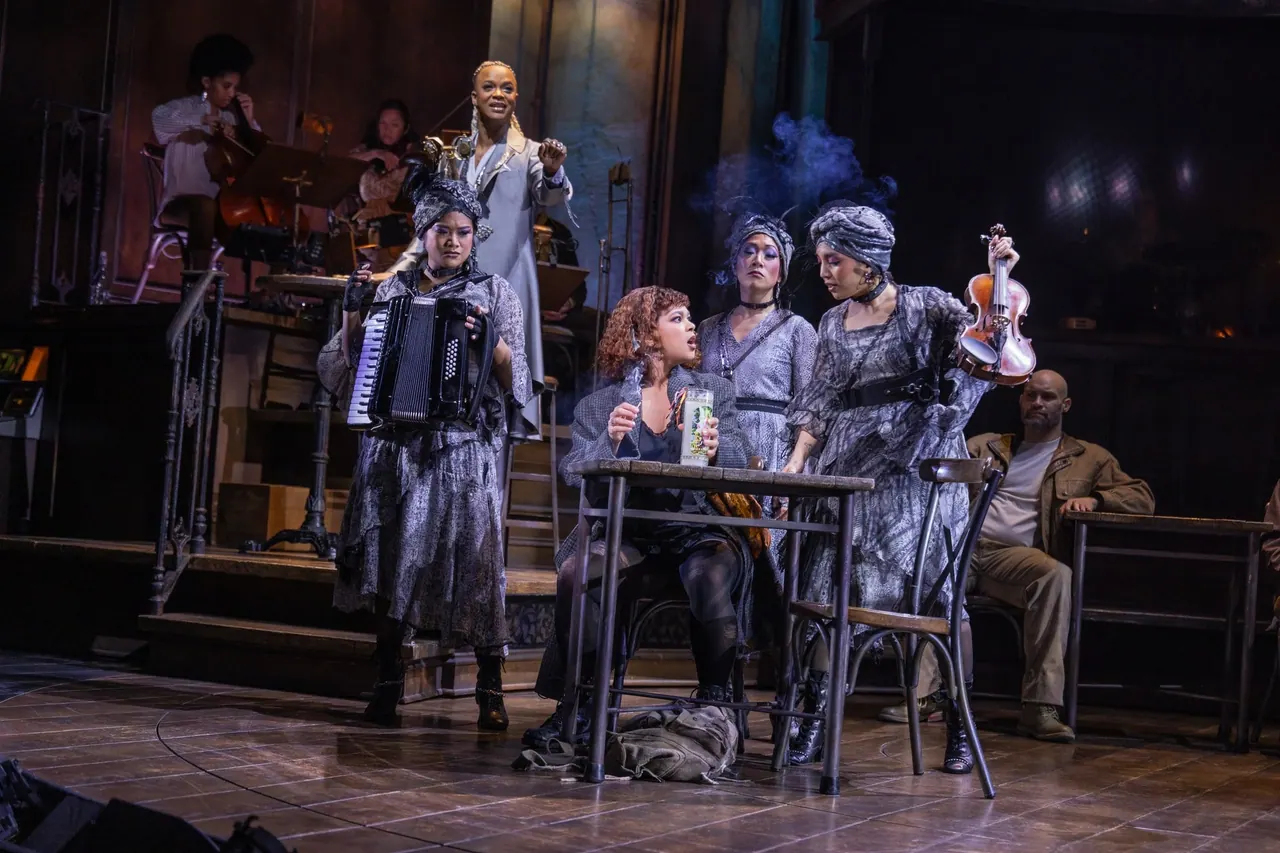
For a change of form, investigate Hadestown and Oh, Mary!: a musical built around myth alongside a dark comedy. Hadestown’s official running time is about two and a half hours; Oh, Mary! is an 80-minute one-act play. The latter’s adult subject matter should be part of the decision, rather than treating a short comedy as suitable for every party.
These are editorial pairing ideas, not ready-made double bills. Reverse their order if the calendars and your preferences make that sensible. You can also choose two longer shows, but agree in advance that the day will revolve around theater. A reluctant companion is unlikely to enjoy a second performance simply because the arithmetic works.
Source: Wicked: Broadway running time; Maybe Happy Ending: duration and intermission; Hadestown: running time and story; Oh, Mary!: one-act format and subject matter

Keep dinner and travel close to the second theater
Choose where to eat only after confirming the venue for the evening performance. A restaurant near the first theater can be convenient, but the remaining journey still belongs in the plan. Check the entrance address rather than navigating to a similarly named venue or a general Times Square pin.
For a comfortable break, look for a meal you can finish without watching the clock through every course. Tell the restaurant your theater arrival target and leave room for paying the bill. A flexible meal is often more useful than a prepaid reservation that forces you to abandon the final applause.
The gap is also a chance to sit somewhere other than a theater seat. Consider whether your party would value a quiet hour more than another attraction. An observation deck, a hotel detour, or shopping can each introduce travel and waiting. Add those only if the remaining time genuinely accommodates them.
Set one day’s budget, then check each order separately
Decide the maximum total for the whole theater day before favoring particular seats. Include both sets of tickets, the meal, and travel. If the first show uses nearly all of the ticket budget, the second selection may become a compromise you would not otherwise accept.
Some performances let you choose individual seats; others offer a section or price band. Check the seating selection and allocation terms for each show. Compare the view, section, and full order total for each performance. An attractive seat for the matinee does not compensate for an unsuitable seat at night, and availability for one production tells you nothing about the other.
Treat the two purchases as separate orders unless checkout explicitly states otherwise. Check both sets of options immediately before proceeding, but remember that a second selection can change while you complete the first. Read each order’s change and cancellation terms; do not assume that a problem with one booking automatically changes the other.
Save both confirmations and make an evening reset
Label or organize the two confirmations so the right ticket is easy to find at each entrance. Check the date and time again when saving them. Follow the delivery instructions for each order; a payment receipt and an admission ticket may be different documents.
Before leaving for the matinee, know the evening venue, how you will get there, and where your party will meet if separated. Check both venues’ bag and access information. Plan around the slowest comfortable walking pace in the party, rather than expecting everyone to match a navigation app.
After the first show, take stock before adding anything optional. Use the break for food, restrooms, and enough rest to pay attention to the evening performance. If you already know that two shows would feel like an endurance exercise, one carefully chosen performance is a better use of your trip.
YOUR QUESTIONS, ANSWERED
Your questions answered
Can you see two Broadway shows in one day?
Yes, when the specific performance times and full running times leave a workable break. Check both calendars, theater locations, and arrival instructions before buying; a generic weekly schedule is not enough.
How long should I leave between Broadway shows?
Subtract the first show’s running time, your exit and travel allowance, and the second theater’s arrival margin from the gap between start times. The remainder needs to accommodate your meal and rest; there is no single buffer that fits every visitor.
Is a 2 p.m. show compatible with a 7 p.m. show?
It depends on the first production’s duration and your plans between theaters. In our hypothetical example, a two-hour-45-minute matinee leaves only about an hour for food and rest after the travel and arrival allowances.
Should the shorter show come first or second?
Choose the order the actual calendars support. A shorter evening performance may suit a party worried about stamina, while a shorter matinee may leave a more relaxed afternoon break.
Are these pairings sold as a two-show package?
No. The pairings are planning suggestions. Check each show’s available performances and complete the individual booking details; no combined price, protected connection, or shared cancellation policy is implied.
Can I add an attraction between the performances?
Only after allowing for both shows, the theater exits and entrances, travel, and a meal. If an attraction depends on a tightly timed admission, it may make the day less comfortable than using the gap to rest.
Sources & editorial approach
Production details checked on October 24, 2026. Recommendations are The Broadway Guide’s planning analysis, not claims of attendance at a particular performance. Prices, schedules, casting, and policies can change.
- Broadway League: date-specific performance schedules ↗
- Wicked: Broadway running time ↗
- Maybe Happy Ending: duration and intermission ↗
- Hadestown: running time and story ↗
- Oh, Mary!: one-act format and subject matter ↗